


18 October 2026
Why Does Bread Dough Collapse During Proofing? A Flour-to-Proofer Troubleshooting Guide
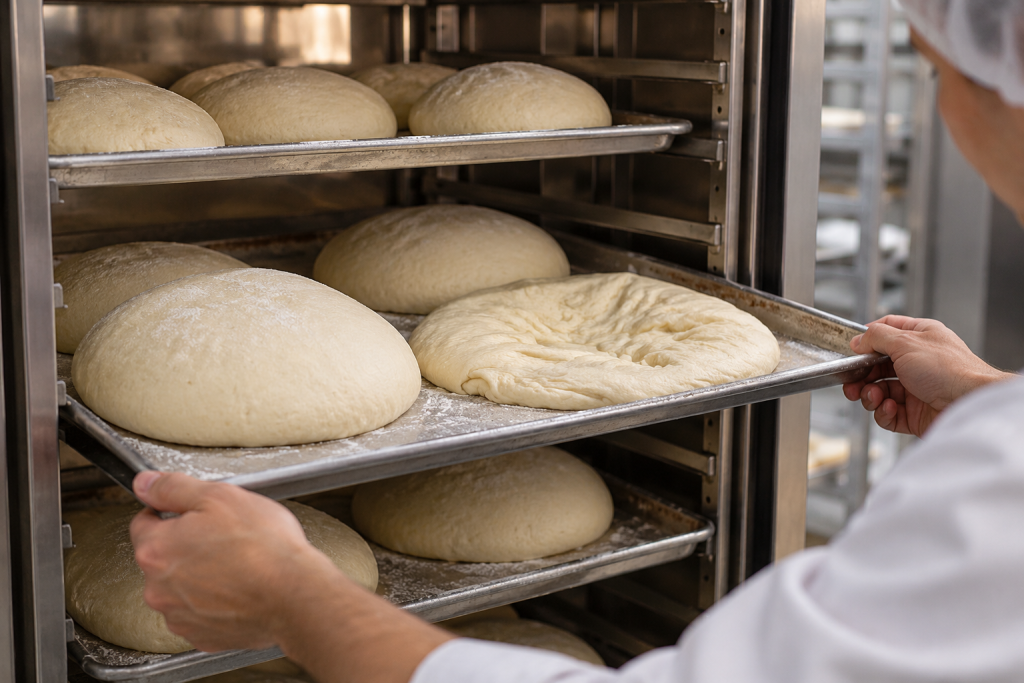
A dough piece that rises and then loses height can disrupt an entire production shift. The visible collapse is an outcome, not a diagnosis: gas may be developing faster than the dough structure can retain it, or a process change may be weakening the dough before baking. A reliable investigation follows the dough from flour intake through mixing, fermentation, proofing and oven loading.
This guide is intended for industrial bakeries. Compare the affected run with a stable control using the same product specification. Review Nandoran bread improvers only as one possible formulation tool, and confirm any change through a controlled production trial. For product-specific guidance, use the technical contact page.
First locate when the collapse begins
Record whether the dough loses volume in bulk fermentation, during intermediate rest, in the final proofer, while transferring to the oven, or after baking. Those stages point to different checks. Photograph or measure dough height at fixed times and note piece weight, proofing duration, dough temperature and line speed. Avoid changing several settings at once: otherwise the cause of improvement or deterioration is difficult to identify.
Common causes of proofing collapse
Proofing time or conditions have drifted
Warmer dough or a warmer proofing environment can accelerate fermentation; a longer dwell caused by a line stoppage can push pieces beyond the validated process window. Check actual residence time rather than the set point alone, and map temperature and relative humidity across the proofer. Confirm belt speed, loading density, air movement and sensor calibration. A set point is not proof that every tray or belt zone experiences the same conditions.
Flour and dough strength vary between lots
Different wheat lots and flour streams can change water absorption, dough development and gas-retention behavior. Review the flour lot, extraction or blend records, moisture and the mill’s available rheological data. The Falling Number method is used as a measure of alpha-amylase activity in grain and flour; interpret it with the full flour specification and the bakery’s validated correlations rather than treating one result as a complete prediction of loaf performance. A farinograph or other dough test can add context, but no single laboratory result replaces a line trial.
Hydration, mixing or ingredient order changed
Confirm water weighing, dough yield, mixing speed, actual mixing time, batch size and ingredient addition sequence. Water and mixing conditions influence dough rheology, while gas-cell stability depends on the developing dough matrix. A scale drift, flour temperature change or unusually long stop during mixing may produce a dough that handles differently even when the recipe appears unchanged. Check whether liquid ingredients or salt additions were delayed or substituted.
Yeast activity or fermentation timing is inconsistent
Check yeast lot, storage and dosing, water temperature, salt concentration and fermentation time. If the dough reaches the proofer at a different temperature or maturity, copying the usual final-proof duration may not yield the same result. Compare the start and end times for each process stage, and review any queues or interruptions between dividing, moulding and proofing.
Handling or transfer damages the dough piece
Look for changes in divider pressure, moulding settings, dough-piece weight, seam position and transfer impact. A weak piece may spread or deflate when handled, even if the proofer itself is stable. Inspect belt transitions, guides and depositor timing, and compare shape and height immediately before and after each transfer.
A practical troubleshooting sequence
- Define the symptom: note the first location and time at which height or shape changes.
- Hold a reference: compare a stable lot or previous successful run with the affected batch.
- Verify measurements: check scales, temperature probes, timers and line-speed readings.
- Trace the flour: compare lot identity, blending records and available quality results.
- Review dough making: check hydration, ingredient sequence, mixing work, temperature and batch size.
- Map proofing and transfer: record dwell time, local environment, loading and handling at each step.
- Test one change: document the hypothesis, control batch, acceptance criteria and result.
Use consistent measures such as piece height at defined locations, spread, dough temperature and final loaf volume or crumb structure. Establish limits from your own product and equipment data; there is no universal proof time or temperature that fits every formula and line.
When to investigate flour enzymes
If the issue appears across different production days or persists despite stable fermentation and handling, review flour functionality with the mill and laboratory. The Hagberg-Perten Falling Number provides an indication related to alpha-amylase activity, not a complete diagnosis of collapse. Examine the applicable method, sampling plan, flour blend and the bakery’s own baking tests together. Do not correct a flour concern by adding an improver blindly: excess or unsuitable additions can create new defects and may not address the source.
If a formulation adjustment is justified, use the product specification and applicable local food regulations, dose accurately, and test against an unchanged control. Nandoran’s product range can be reviewed with a technical specialist, but the selected product and dosage should be validated for the exact flour, bread type and line.
Batch record checklist
- flour supplier, lot and blend identity;
- ingredient weights, water temperature and dough yield;
- mixer, batch size, speed, time and discharge temperature;
- yeast lot and dosing, fermentation and proofing times;
- proofer readings across zones, belt speed and line interruptions;
- dough-piece weight, dimensions and observations at each transfer;
- final loaf volume, shape, crumb and trial changes.
Frequently asked questions
Does a collapsed dough always mean it was overproofed?
No. Over-proofing is one possible cause, but flour variation, hydration, mixing, fermentation maturity or handling can also contribute. Find the earliest point where the symptom appears before adjusting proof time.
Can a bread improver prevent every collapse?
No. Improvers are formulation tools with specific functions; they cannot correct an uncalibrated scale, a proofer hot spot or an uncontrolled line delay. Verify the process first and validate any formulation change.
Which flour test should be checked first?
Start with the tests included in your flour specification and the data relevant to the observed defect. Falling Number can indicate alpha-amylase activity, while rheological tests describe other aspects of flour behavior. Interpret results with production and baking data.